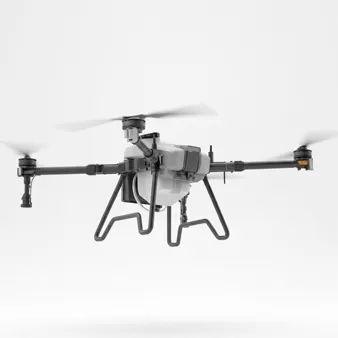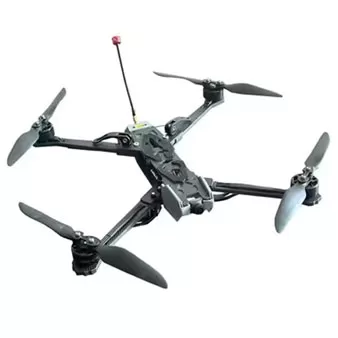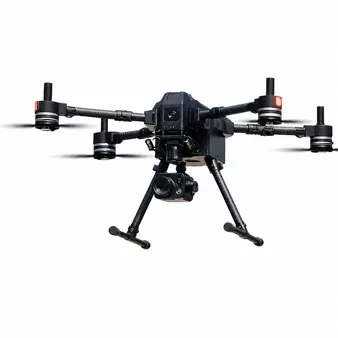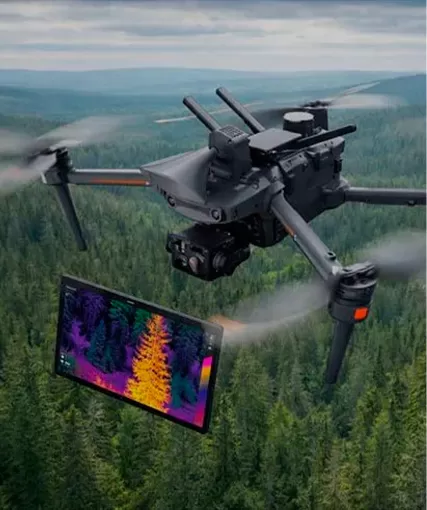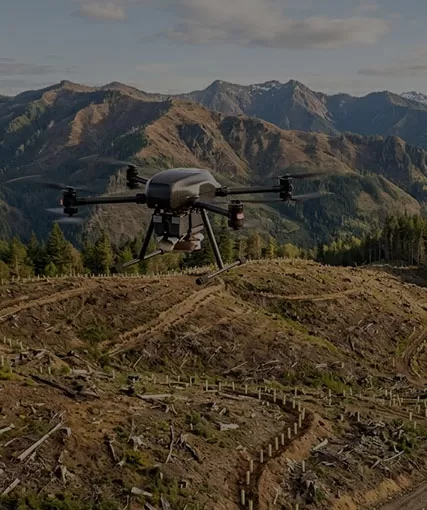
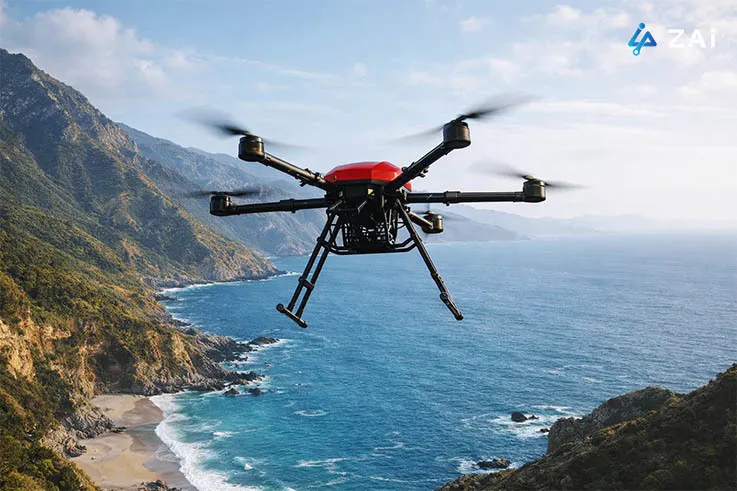
When people ask, “How much can a drone lift?” the answer depends entirely on drone class.
Consumer drones: typically lift 200–800 grams, enough for a camera and gimbal.
Industrial drones (Industrial UAVs): lift 1 kg to 300 kg+, supporting sensors, cargo, and mission-critical equipment.
This shift from grams to kilograms defines the modern industrial drone, also known as a lift drone or payload drone. These platforms are engineered for enterprise use cases such as energy inspection, agriculture, logistics, and emergency response—where reliability and precision matter more than speed or aesthetics.
When carrying expensive LiDAR systems, multispectral sensors, or heavy cargo, precision engineering is non-negotiable.
ZAi drones are engineered around thrust-to-weight efficiency, redundant systems, and mission-specific payload optimization, rather than headline payload numbers alone.
Before comparing payload capacities, it is essential to understand the core technical terms.
The weight of the drone without batteries or payload.
The absolute maximum weight the drone can safely lift off with, including:
Airframe
Batteries
Payload
The usable weight capacity available for:
Sensors
Cameras
Cargo
Winches or liquid tanks
Payload weight and battery life are inversely proportional.
More payload = shorter flight time.
Example (ZAi-20):
Dry Weight: 20 kg
Maximum Take-Off Weight (MTOW): 40 kg
Maximum Net Payload: 20 kg
To help operators identify the right platform, industrial lift drones can be grouped into three professional tiers.
Typical applications:
High-end RGB cameras
Long-distance inspection missions
Lightweight cargo delivery
Example:
ZAi-5 – A compact industrial-grade UAV optimized for efficiency and stability
Best for:
Energy asset inspections
Mapping and surveying
Agricultural monitoring
Typical applications:
Multispectral and hyperspectral sensors
Small logistics packages
Rescue winches and specialized equipment
Example:
ZAi-20 – A heavy-lift industrial drone for inspection and rescue missions
Best for:
Search and rescue coordination
Precision agriculture
Infrastructure inspections
Typical applications:
Logistics and cargo transport
Bulky industrial equipment
Emergency relief supplies
Example:
ZAi-TH600 – A heavy-duty UAV with up to 300 kg payload capacity
Best for:
Remote logistics
Disaster response
Island and offshore supply missions
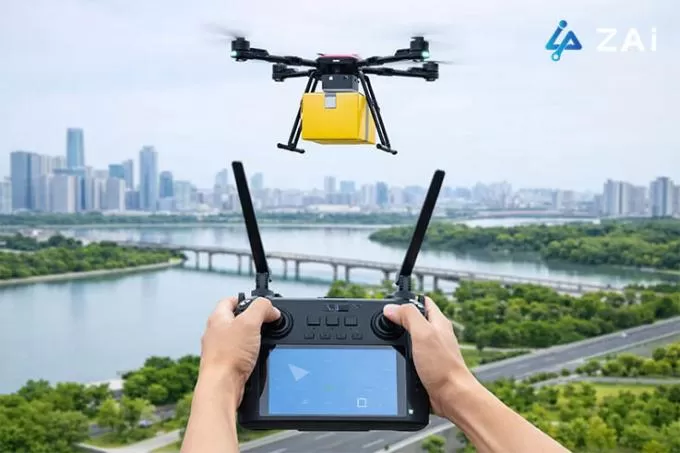
Payload capacity is not fixed. Real-world performance depends on multiple variables.
Larger diameters generate more lift
Optimized pitch improves thrust efficiency
ZAi approach: Balanced propeller geometry for high thrust-to-weight ratios.
LiPo batteries: High discharge rates, widely used today
Solid-state batteries: Higher energy density, emerging technology
Altitude: Lower air density reduces lift
Temperature: Hot air decreases thrust efficiency
Wind speed: Increases power consumption and instability
Carrying heavy LiDAR systems
Bridge, pipeline, and powerline inspections
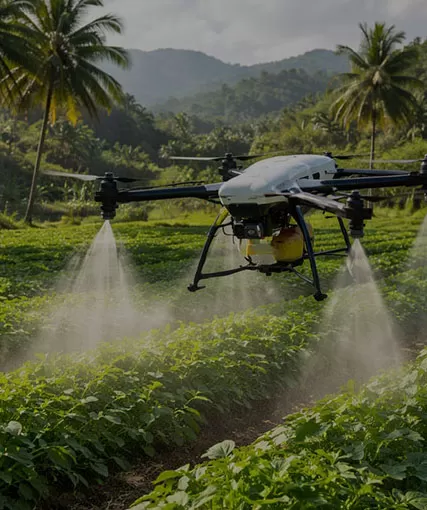
Transporting liquid tanks for precision spraying
Example: ZAi-T50 agricultural drone for agricultural payload operations
Transporting AEDs
Delivering life vests or medical kits
Deploying rescue winches
In the United States:
FAA Part 107 applies to most commercial drones
Drones over 55 lbs (25 kg) require special airworthiness certification or exemptions
International note:
Regulations vary by country. Payload limits, licensing, and operational permissions differ across the EU, UK, and Asia-Pacific regions.
Heavy-lift scenarios demand:
Redundant propulsion systems
Fail-safe flight controllers
Emergency landing protocols
Choosing a drone is not about selecting the platform with the highest lifting number. It is about selecting the right payload-to-power ratio for your specific mission.
Whether you manage energy infrastructure, agricultural operations, logistics networks, or search-and-rescue missions, the correct industrial drone solution balances:
Payload
Flight time
Safety
Compliance
Consult with ZAi engineers to calculate the perfect payload-to-power ratio for your project and deploy a drone solution built for real-world performance.
 English
 français
 Deutsch
 русский
 فارسی
فارسی ไทย
ไทย العربية
 Nederland
 বাঙালি
 Македонија